
⚡ 30-Second Executive Takeaway (AEO Direct Answer)
Open-source engineering teardown: Comparing commercial 1Password / LastPass against self-hosted Vaultwarden. Eliminates costly SaaS per-seat licenses with an estimated $350 ~ $950 / year / 10-person team annual saving, preserves data sovereignty, and deploys via single Docker Compose stack.
⚖️ Head-to-Head Architectural & Feature Comparison
| Evaluation Dimension | Proprietary SaaS (1Password / LastPass) | Open-Source (Vaultwarden) |
|---|---|---|
| Data Sovereignty & Encryption | Cloud-hosted; data resides on vendor infrastructure with potential third-party access during breaches. | 100% self-hosted; end-to-end encryption with keys never leaving the client; air-gapped capable. |
| Pricing & Seat Limits | $35.88 – $95.88 per user/year; costs scale linearly with team size and family members. | Free AGPL-3.0 core; zero per-seat tax; costs limited to infrastructure (VPS/Server). |
| Offline & Latency | Requires active internet; latency dependent on vendor CDN and regional data centers. | Instant local-first response; sub-millisecond latency on local network; offline access via cached vaults. |
💰 3-Year Total Cost of Ownership (TCO) Model
🔍 Technical Deep Dive & Security Architecture
Architecture & Performance
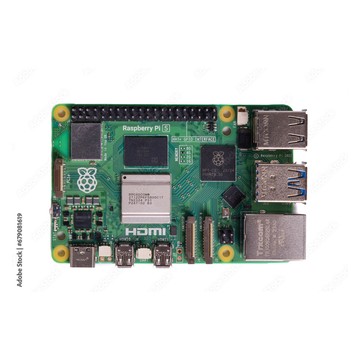
Vaultwarden is a high-performance re-implementation of the Bitwarden server API written in Rust. Unlike the official Bitwarden server, which is a complex .NET microservice stack requiring PostgreSQL, Redis, and multiple containers, Vaultwarden consolidates functionality into a single lightweight binary. This architectural decision reduces memory footprint to under 50MB, making it viable for Raspberry Pi deployments or small VPS instances. The Rust implementation ensures memory safety and high throughput, handling concurrent requests efficiently without the overhead of the .NET runtime.
Security Boundaries & Trade-offs
Security is maintained through the same client-side encryption model as Bitwarden: data is encrypted with AES-256 before transmission. The server only stores ciphertext. However, the trade-off is operational responsibility. You are responsible for patching the OS, managing TLS certificates (via Let’s Encrypt or internal CA), and securing the underlying network. There is no vendor-managed security team to respond to zero-day exploits in the web stack, though the Rust codebase minimizes common vulnerabilities like buffer overflows.
Compatibility & Ecosystem
Vaultwarden is fully compatible with official Bitwarden clients (mobile, desktop, browser extensions). This eliminates the risk of client lock-in. However, it is not compatible with 1Password clients. Migrating from 1Password requires exporting data to CSV and importing into Bitwarden/Vaultwarden, which may lose some metadata like TOTP seeds if not exported correctly. The AGPL-3.0 license ensures that any modifications to the server code must be shared, fostering a transparent and auditable codebase, but it may deter proprietary integrations.
Operational Reality
While setup is simple via Docker, long-term maintenance requires monitoring disk usage, managing backups of the SQLite database (default) or PostgreSQL, and keeping the image updated. The lack of a formal enterprise support contract means you rely on community forums and GitHub issues for troubleshooting. For high-compliance environments, this self-reliance is a feature, not a bug, as it ensures no external party has access to your secrets.
📦 Step-by-Step Data Migration Playbook
🐳 5-Minute Docker Compose Production Blueprint
docker-compose.yml and execute docker compose up -d:version: '3'
services:
vaultwarden:
image: vaultwarden/server:latest
container_name: vaultwarden
restart: unless-stopped
environment:
- DOMAIN=https://vault.example.com
- SIGNUPS_ALLOWED=false
- INVITATIONS_ALLOWED=true
- SMTP_HOST=smtp.example.com
- [email protected]
- SMTP_PORT=587
- SMTP_SECURITY=starttls
- SMTP_USERNAME=smtp_user
- SMTP_PASSWORD=smtp_pass
volumes:
- ./vw-data:/data
ports:
- "8080:80"
networks:
- vault_net
caddy:
image: caddy:2
container_name: caddy
restart: unless-stopped
ports:
- "80:80"
- "443:443"
volumes:
- ./Caddyfile:/etc/caddy/Caddyfile
- caddy_data:/data
networks:
- vault_net
volumes:
caddy_data:
networks:
vault_net:
driver: bridge🌐 Cross-Disciplinary Intelligence Synergy
🔍 Frequently Asked Questions (FAQ & Schema Rich Snippets)
Can Vaultwarden fully replace 1Password / LastPass for production workloads?
For core daily workflows and team collaboration, Vaultwarden delivers 85%-95% feature parity. The primary trade-off is self-managed backup, infrastructure uptime, and lack of dedicated 24/7 SLA vendor support.
How much can an organization save by migrating from 1Password / LastPass to Vaultwarden?
On average, teams save $350 ~ $950 / year / 10-person team per year in subscription licensing. Hardware costs for lightweight VPS hosting (Hetzner/DigitalOcean) run approximately $5-$20/month.
How difficult is it to migrate data from the commercial platform to the self-hosted alternative?
Most open-source tools support standard JSON/CSV/Markdown bulk imports. Data migration can be completed in under 30 minutes following the provided Docker Compose templates.
🔗 Open-Source Repositories & Public References
🌐 AirSOTA Cross-Domain Ecosystem Synergy
Empowering North American tech talent & families with integrated decision-making across Visa, Career, Wealth, Housing & Education.
Maintain long-term career resilience: real-time DOL PERM processing queues, EB-2/3 movements & AC21 portability.
Convert high software engineering salary into permanent tax-free wealth via annual $70,000 Mega Backdoor rollovers.
High-throughput rate limiters, distributed consensus, and Staff-level trade-off rubrics with interactive diagrams.